
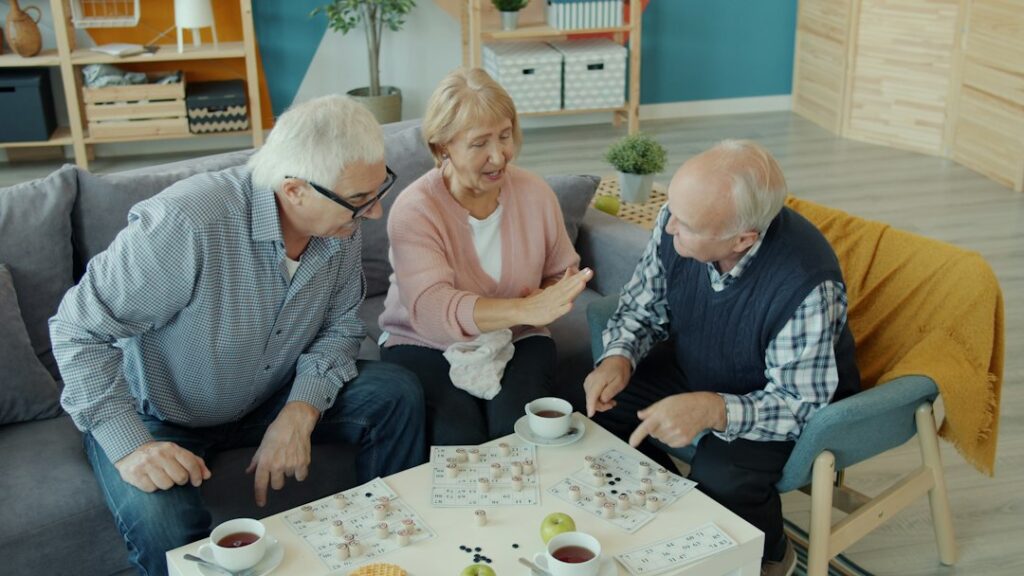
Why games and pastimes matter in assisted living
Games and pastimes provide more than entertainment in assisted living. They can support social connection, memory, movement, communication, creativity, and a sense of daily purpose.
For residents in Oreland, PA, activities may be especially valuable during colder months, rainy days, or periods when outdoor plans are limited. A well-planned activity schedule gives people opportunities to participate at different energy levels, whether they prefer a lively group gathering, a quiet hobby, or a short visit with one or two neighbors.
The most successful activities are not necessarily complicated. Familiar games, music, crafts, conversation, and light exercise often work well because residents can join without extensive instruction or special equipment.
What games are popular in assisted living?
Popular games are usually familiar, adaptable, and easy to play while seated. Residents often enjoy activities that encourage conversation without making anyone feel pressured to compete.
Common choices include:
- Bingo with large, easy-to-read cards
- Card games such as bridge, rummy, solitaire, or simple matching games
- Dominoes and tile games
- Checkers, chess, and adapted strategy games
- Word games, trivia, and spelling activities
- Jigsaw puzzles with larger pieces
- Dice games that use simple scoring
- Board games based on familiar themes or everyday knowledge
Trivia can be adjusted to suit the group. Questions may focus on music, television, local history, household traditions, sports, food, or events from different decades. The goal is participation, not testing memory. A relaxed format allows residents to share stories even when they do not know the answer.
Some residents prefer cooperative games in which everyone works toward a shared goal. These can be a good alternative for people who dislike losing or find competitive play stressful.
Which pastimes are best for residents with memory loss?
Residents with memory loss often benefit from structured, familiar, and sensory activities. The activity should be easy to understand, with no expectation that a person remember every rule or complete a task perfectly.
Helpful options may include:
- Sorting buttons, cards, or colored objects
- Looking through photo albums
- Listening to familiar songs
- Folding towels or arranging flowers
- Simple painting, coloring, or collage projects
- Matching pictures, colors, or household objects
- Reminiscence conversations about school, work, family traditions, or holidays
- Baking-related activities that focus on measuring, stirring, or decorating
A person who cannot follow a full card game may still enjoy holding cards, sorting them by color, or watching others play. Activities can be shortened, repeated, or simplified without drawing attention to the change.
A common misconception is that every pastime must improve memory. The more realistic goal is meaningful engagement. Enjoyment, comfort, connection, and a sense of competence are valuable outcomes even when a resident does not remember the activity later.
What activities can residents enjoy without leaving the building?
Many enjoyable pastimes can take place indoors and require little space. This is useful during icy conditions, summer heat, or other weather that makes travel uncomfortable.
Music is one of the most flexible options. Residents may listen to familiar recordings, sing along, identify songs, play simple instruments, or discuss concerts and dances from earlier years. Music can be offered in a group or enjoyed privately.
Reading activities can include newspapers, short stories, poetry, magazines, large-print books, or shared reading aloud. A discussion does not need to focus on current events; it might center on a favorite author, a memorable character, or a personal experience connected to the reading.
Other indoor pastimes include:
- Knitting, crocheting, sewing, or simple textile projects
- Painting, drawing, and seasonal crafts
- Indoor gardening with safe containers
- Cooking demonstrations and no-bake recipes
- Movie discussions rather than passive viewing alone
- Writing letters, journaling, or recording family memories
- Puzzles, model building, and tabletop activities

For residents who tire easily, activities can be offered in shorter sessions. Fifteen or twenty minutes of enjoyable participation may be more appropriate than a long program.
How can activities accommodate different physical abilities?
Activities should be designed so residents can participate from a chair, wheelchair, or bed when needed. A person does not have to move quickly, stand, or use both hands to be included.
For games, large-print materials, high-contrast colors, oversized playing pieces, card holders, and easy-grip objects can make participation more comfortable. Tables should allow enough room for mobility devices, and frequently used supplies should be placed within safe reach.
Light movement activities may include seated stretching, hand exercises, balloon taps, rhythm exercises, or gentle dancing from a chair. These activities should respect personal limits and stop if a resident experiences pain, dizziness, unusual shortness of breath, or fatigue.
Vision and hearing also affect participation. Good lighting, reduced background noise, clearly spoken instructions, and written reminders can help residents follow along. Instructions are easier to understand when given one step at a time.
How do residents choose activities that match their interests?
Personal history is often a better guide than age. A former teacher may enjoy trivia or reading aloud. Someone who worked with tools may prefer hands-on projects. A lifelong music enthusiast may respond strongly to familiar songs, while another resident may prefer quiet puzzles.
Preferences can be learned through conversation and observation:
- Ask what the resident enjoyed before moving into assisted living.
- Offer two or three choices rather than an open-ended question.
- Notice whether the person prefers groups, one-on-one visits, or independent activities.
- Watch for signs of enjoyment, frustration, boredom, or fatigue.
- Revisit activities at different times of day, since energy and attention can change.
A resident who declines a group game may still enjoy sitting nearby, listening to conversation, or joining for the final few minutes. Participation should not be treated as all-or-nothing.
Are competitive games helpful or stressful?
Competitive games can be enjoyable when the rules are clear and the atmosphere remains friendly. Some residents like keeping score, planning moves, and celebrating a win. Others may feel embarrassed by mistakes or become upset when they lose.
Helpful adjustments include using teams, allowing cooperative play, removing strict time limits, and treating scores as optional. The person leading the activity can emphasize humor and social interaction rather than performance.
It is also useful to avoid assuming that a quiet resident is uninterested. They may prefer observing first, need more time to understand the activity, or feel uncomfortable in a crowded group. A smaller gathering may be a better fit.
What makes a pastime meaningful?
A meaningful pastime usually connects with a resident’s identity, relationships, abilities, or memories. It may produce something useful, create a conversation, or simply provide a pleasant break in the day.
An activity does not need to be new or intellectually demanding. Repeating a favorite game, listening to a familiar song, watering plants, or sharing a family recipe can provide comfort and continuity.
The best activity programs leave room for choice. Residents should be able to participate actively, adapt the activity, observe without pressure, or choose something quieter. In assisted living, enjoyment is not measured only by winning, finishing a project, or remembering every detail. Feeling included and respected is often the most meaningful result.
